“Just living is not enough… one must have sunshine, freedom, and a little flower.”
— Hans Christian Andersen, The Butterfly
We’re all familiar with the work of Danish fairy tale writer Hans Christian Andersen. Whether it’s a duckling discovering its self-worth, a mermaid finding her voice, or a tiny girl born from a flower navigating a world she doesn’t quite fit into, his stories have shaped generations. In Denmark, they reflect something more – a cultural outlook rooted in comfort, individuality, and quiet joy.
Published in Copenhagen throughout the 19th century, these stories were often read aloud in the evening, set against the glow and warmth of candlelight in homes across Denmark. Today, though it may look different, that same spirit lives on in the concept of hygge.
It’s not something easily defined – but something you begin to understand the more time you spend here.
I recently visited Denmark’s capital with two of my close friends, half expecting it to feel like any other major city – crowded, fast-paced, and touristy. Within seconds of stepping into the city center, I knew it was different.
There’s a stillness that’s almost difficult to explain about Copenhagen. Not in a way that feels dull or regimented, but something more deeply ingrained in the rhythms of daily life.
From the airport, I took the metro during peak morning rush hour. The car quickly filled with commuters – and it was silent. I found myself scanning for a “quiet car” sign, convinced I had somehow stepped into one by accident – because even whispering felt like breaking an unspoken rule.
That quiet extends to the streets – free from honking cars, exhaust and constant noise. One of my first impressions of Copenhagen was something often overlooked, something that usually belongs to small towns: you can hear the birds. Not as background noise, but clearly – the screeching of seagulls in the morning becoming the loudest sound in the entire city.
And yet, that quiet first impression is only part of the story.
A city of superlatives
At times, Copenhagen feels like a city that keeps quietly winning awards – whether you’re paying attention or not. It’s the city equivalent of the overachiever in school – the one constantly called up during an award ceremony – yet somehow never boastful about it.
Though it is often ranked among the best in the world, the city never feels flashy or self-congratulatory. Instead, everything fits together seamlessly, like a puzzle whose pieces were never forced into place. As a first-time visitor, it’s impossible not to notice.
The world’s greenest city
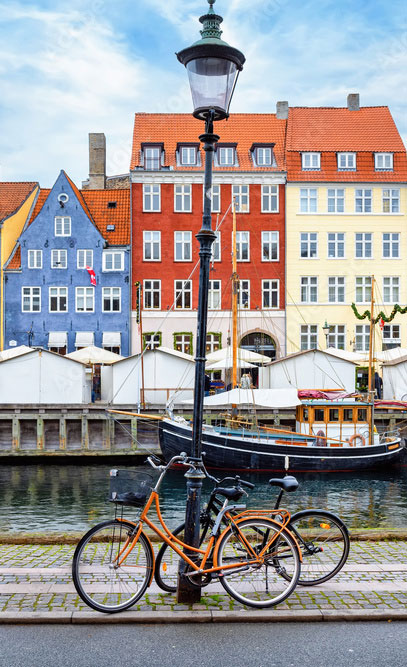
Copenhagen is often ranked among the greenest cities in the world, and it shows in everyday life. Streets are designed for people, not just cars, and cycling is the preferred way to get around. Many locals I spoke with have never owned a car – rain or shine, biking is simply part of life.
As one of the world’s leading cycling cities, it’s estimated there are more bicycles than cars, with a majority of residents commuting by bike. Watching the steady flow of cyclists during rush hour, you realize it’s more than transportation and sustainability, but rather community.
Beyond that, Copenhagen simply feels clean. The air is crisp, the water is clear enough to swim in, and the harbor plays a central role in daily life. Even in colder months, locals plunge into the water before warming up in nearby saunas, embracing the contrast with a quiet sense of joy. I admired this from the distance and left it to the locals.
The world’s happiest city
Beyond sustainability, there’s a sense of contentment that defines Copenhagen.
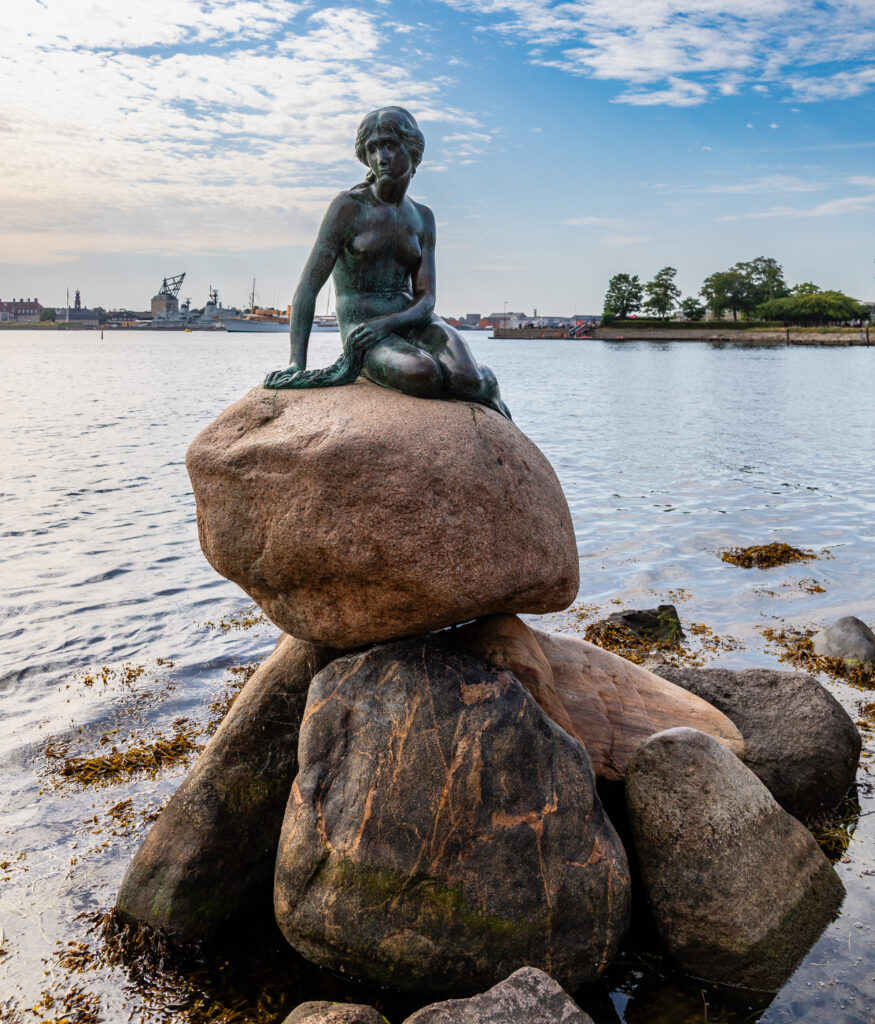
Along the harbor, the Little Mermaid sits quietly on her stone – a quiet reminder of the stories born here, and the feeling they leave behind. It’s a feeling that seems to extend far beyond its stories. Year after year, it ranks among the happiest cities in the world, with quality of life playing a major role. In 2026, it’s been ranked number one.
But happiness here doesn’t feel exaggerated. If anything, it made me realize how much noise I’m used to mistaking for energy in other cities. You won’t see people skipping down the street, but there’s a noticeable sense of calm among those who live here.
I felt this most during a canal cruise. On a weekend afternoon, locals of all ages lined the water’s edge – sharing wine, embracing friends, laughing, and waving to passing boats. It was a simple yet powerful display of community, one that made even a visitor like me feel included in something genuine.
The world’s design city
Scandinavian design is known for its simplicity and functionality, and Copenhagen embodies that effortlessly. Named the UNESCO-UIA World Capital of Architecture in 2023, the city blends historic charm with modern design.
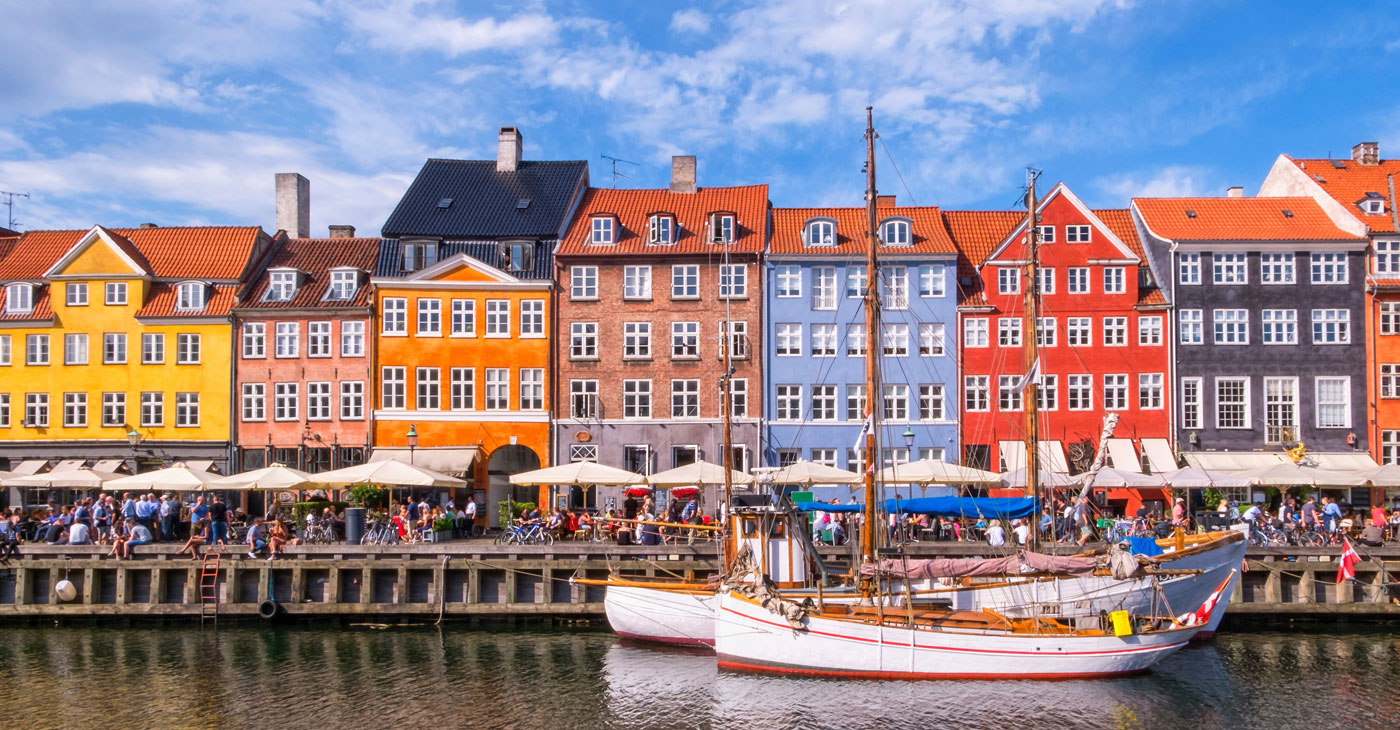
Before visiting, I expected a landscape dominated by sleek, contemporary design. Instead, I found a city full of character – cobblestone streets, pastel buildings, red-tiled roofs, and centuries-old architecture woven seamlessly with contemporary structures.
From the top of the 17th-century Round Tower, the view reveals a skyline of steeples and soft-colored rooftops. Along the water, historic landmarks like the Marble Church sit beside modern icons like the Black Diamond Library and the Royal Danish Opera House. The contrast feels intentional – simple, yet striking.
The design of Copenhagen makes it incredibly easy to explore. It’s a city built not just to be seen, but to be lived in – and that idea of comfort sits at the heart of everything Danish.
Where hygge takes shape
There’s something about Copenhagen that invites you to slow down – not in a forced way, but naturally. It’s the same feeling first introduced in those candlelit evenings of Andersen’s time, now lived out in everyday moments.
This is where the idea of hygge takes shape – not as something you define, but something you feel. It lives in creating warmth in spaces, fostering a sense of peace, and in the ease with which people move through their day.
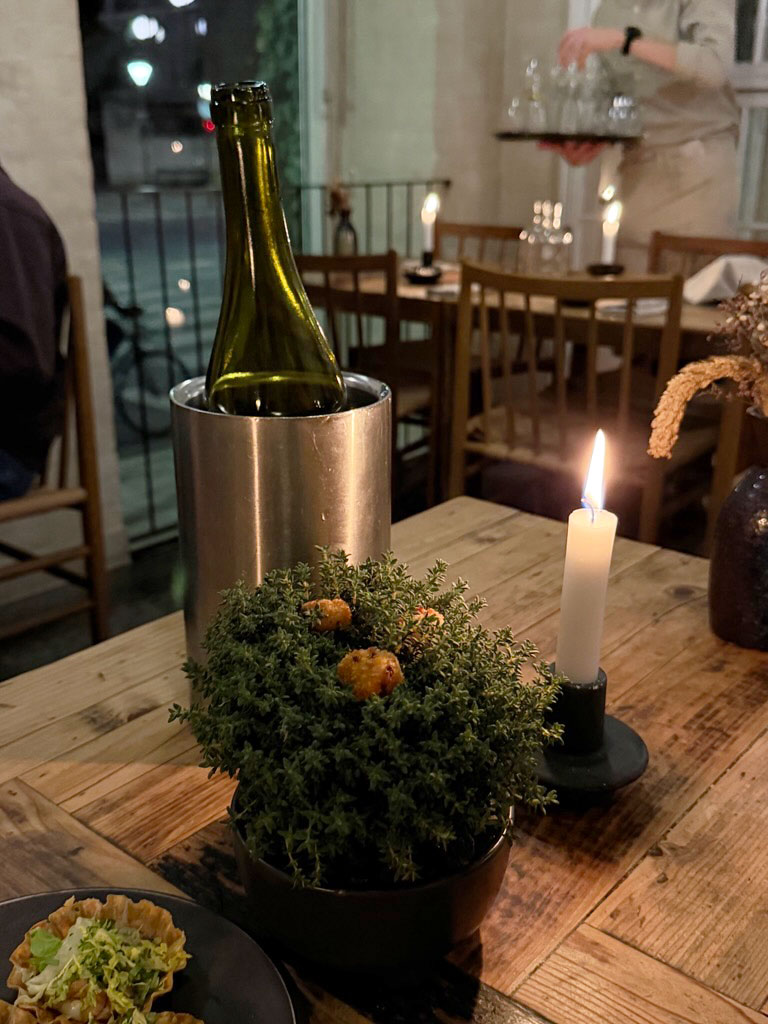
Take this for example: I dined at Høst one evening, a restaurant featured in the Michelin Guide for its innovative Nordic cuisine. Unbeknownst to me, Travel + Leisure named it the World’s Most Beautiful Restaurant. There was nothing extravagant or opulent about the space in the way you might imagine; rather, it was perfectly cozy and welcoming. Warm woods, white-painted brick walls with vines climbing their sides, potted trees, and flickering tapered candles on each table defined the atmosphere. It truly felt like being invited into someone’s home.
A city of delights
And nowhere is that sense of everyday comfort more tangible than in its food.
If hygge is a feeling, then Copenhagen’s food culture is one of the easiest ways to experience it. With 19 Michelin-starred restaurants, the city has firmly established itself as a culinary destination – but here, even the simplest pleasures feel just as meaningful.
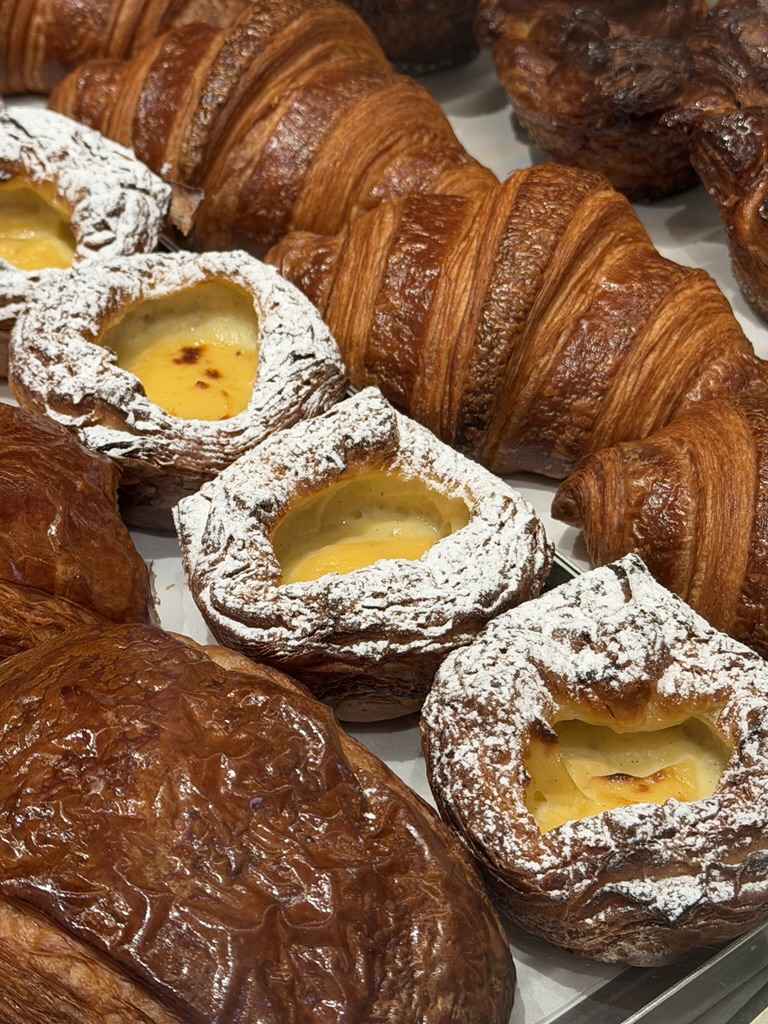
The city’s many bakeries are hard to resist. Pastries sit delicately behind glass counters, each one more inviting than the last, filling the air with the scent of warm butter, sugar, and spice. It’s a massive – and delicious – part of the culture here.
Interestingly, what we think of as “Danish” pastries aren’t entirely Danish. Austrian bakers introduced many of the techniques in the 19th century, and the Danes have made them their own.
Among the most popular are snegl, a cinnamon roll–style pastry, and the cardamom bun – soft, aromatic, and just sweet enough. As someone who loves anything sweet, I found myself sampling my way through the city, drawn in by bakeries on nearly every corner.
One favorite was Hart, where I tried their cardamom croissant – caramelized, rich in spice, and perfectly flaky. I am still thinking about it weeks later.
For something savory, Copenhagen is famous for its street hot dogs. Pølser are long red sausages topped with crispy fried onions, raw onions, pickled cucumbers, and drizzled with a tangy remoulade and ketchup. I don’t usually like hot dogs, but I enjoyed it enough to buy a hot dog magnet from a tourist shop just to remember it.
Once upon a time… and still today
But hygge isn’t the whole story. Copenhagen is, at its heart, an incredibly playful city.
It shows up in unexpected ways – like trampolines built directly into the sidewalks, where children (and plenty of adults) pause mid-commute to jump, laugh, and carry on. And then there’s Tivoli Gardens, the historic amusement park in the center of the city, where lights, music, and rides create a sense of wonder that feels both nostalgic and entirely alive.
It’s a reminder that joy is built into everyday life.
We often think of fairy tales as something distant – stories that exist in a world far removed from our own. But after time spent here, Copenhagen challenges that idea.
In many ways, it feels like stepping into one.
Not because it’s perfect, but because it’s intentional. It embraces simplicity, celebrates individuality, and finds beauty in the everyday. Much like Andersen’s stories, it reminds us that meaning is often found in the quietest moments.
And perhaps that’s what makes Copenhagen feel like a modern fairy tale. Not that it’s out of reach, but that it reminds you how much beauty can exist in the ordinary – much like the Ugly Duckling.